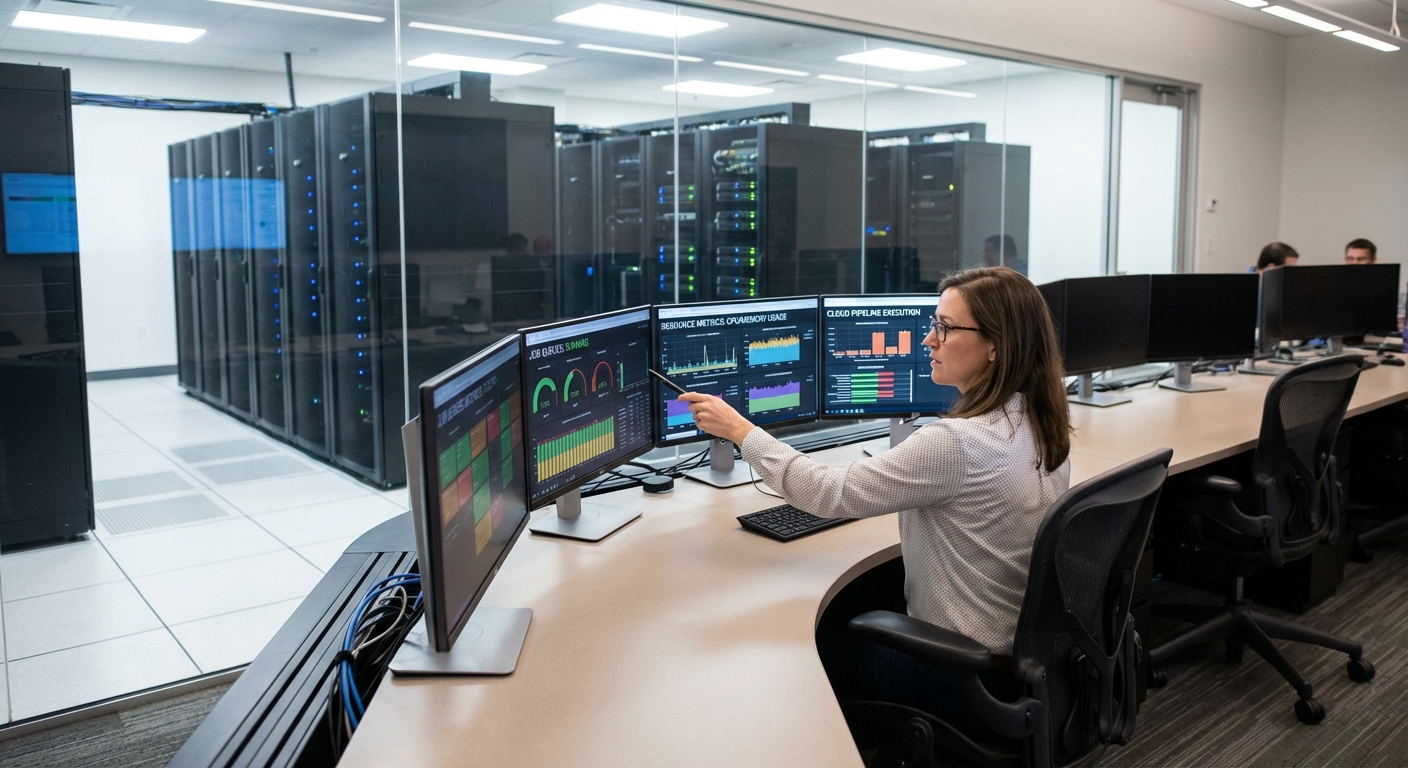
The Texas Medical Center in Houston is the largest medical complex in the world — 60 member institutions, more than 100,000 employees, and a research enterprise that spans basic discovery, translational science, and clinical care simultaneously. BioMate is built inside that ecosystem, and it shows in the problems we prioritize.
Why Location Shapes a Platform
Software built in isolation from its users tends to optimize for what is technically interesting rather than what is practically necessary. A genomics platform built by people who rarely talk to the bench scientists using it will have different default QC thresholds, different parameter ranges, and different output formats than one tested daily against real research workflows at institutions with real patients and real deadlines.
Proximity to the TMC means we test BioMate against the actual research happening at member institutions — the variant calling pipelines, the cryo-EM data from core facility sessions, the drug screening assays, the multi-omics integration projects. When a workflow parameter does not match the practical needs of the researchers using it, we hear about it quickly and directly.
What We Have Learned
Six months of operation adjacent to TMC research has taught us several things that shaped BioMate's design. The bottleneck is rarely compute — it is the time between when a researcher gets results and when they understand what to do with them. The most common request is not a new workflow — it is better explanation of why a result looks the way it does. The most common failure mode is not technical — it is a mismatch between the QC thresholds the platform applies and the standards the relevant research community actually uses.
"We are not optimizing for Silicon Valley demos. We are optimizing for the postdoc at a TMC cancer center who needs a variant call before a clinical tumor board meeting."
A Living Test Environment
The TMC is not just an inspiration for the platform — it is a continuous source of the real-world edge cases that make bioinformatics software robust. FFPE-degraded tumor samples. Cryo-EM sessions that ran overnight with suboptimal ice quality. Drug screens that produced unexpected hit patterns. Low-coverage sequencing from resource-limited clinical studies. These are the conditions under which BioMate must work, and the proximity to institutions that generate them regularly is an advantage that cannot be replicated from a distance.
BioMate's design decisions are shaped by real research workflows, not by synthetic benchmarks. The QC thresholds reflect what reviewers at real journals actually require. The output formats are what PIs at real institutions actually need. The failure modes that get fixed first are the ones that real researchers actually encounter.